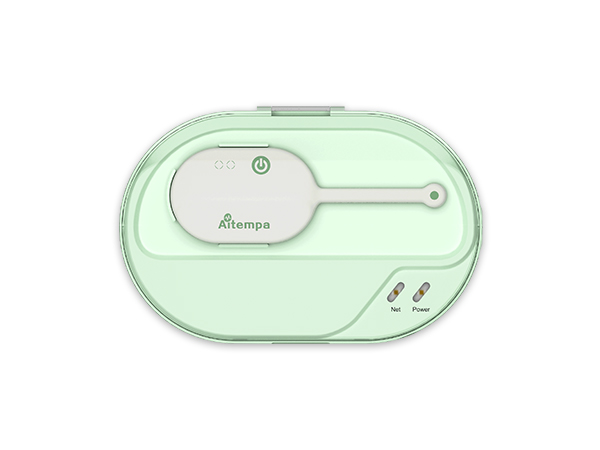
Aitempa Home Health Monitor Helps You Notice 3 Subtle Signals Your Body Gives
Your body sends out quiet signals long before you feel “unwell.” But because these changes are small and gradual, most people miss them. Aitempa helps you stay aware of these whispered shifts by visualizing your personal temperature trends, making it easier to understand what your body might be telling you and helping you adjust your daily routine more mindfully. Here are three subtle signs your body often gives — and how a home health monitor can help you notice the skin-temperature patterns behind them.
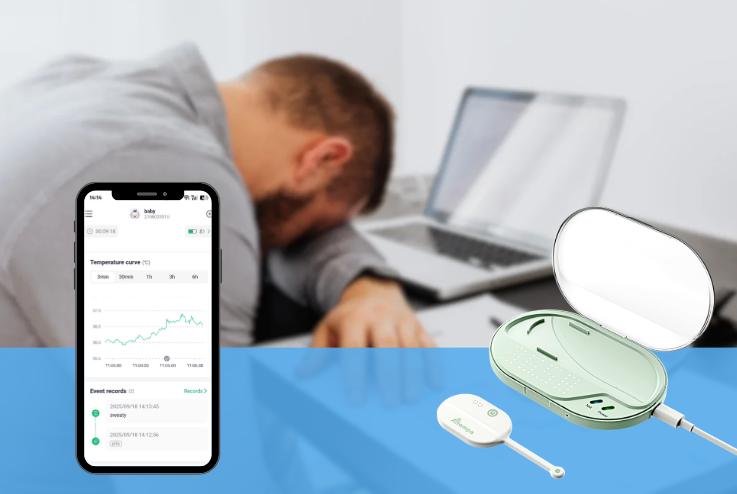
1. When your daily energy feels “off,” your temperature rhythm often reflects it. Whether you wake up unusually tired, struggle through a heavier-than-usual afternoon slump, or simply feel out of rhythm, these changes are often linked to stress, poor sleep, or overexertion. Even without obvious symptoms, your daily temperature curve can shift in small ways during these periods. Aitempa home health monitor tracks your skin temperature and visualizes how your pattern changes — such as delayed cooling at night, slight morning elevation, or an inconsistent daily curve — giving you an intuitive way to recognize when your body may need rest, recovery, or a better sleep routine.
2. When your immune system is quietly working harder, tiny temperature changes occur before you notice anything. Early immune activation — even long before you feel sick — often leads to small baseline temperature increases, sometimes just 0.1–0.3°C, which are too subtle to detect on your own. Because the Aitempa home health tracker records temperature throughout the day and during sleep, it can show when your personal baseline trends slightly above your normal range. This isn’t a diagnosis, but the home health tracker offers a helpful early signal that you might want to hydrate more, sleep earlier, or be more attentive to how you’re feeling.
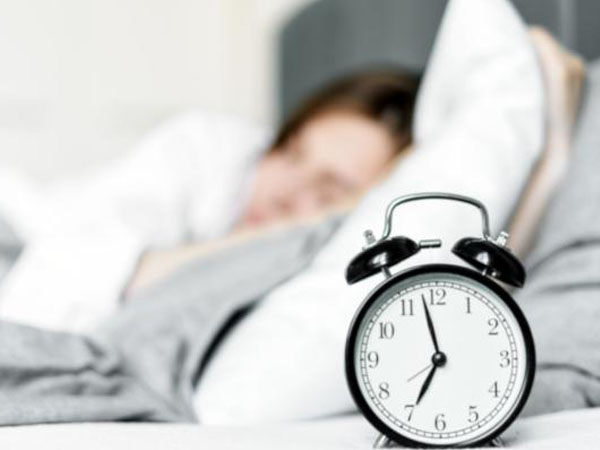
3. When your sleep rhythm is disrupted, your temperature pattern becomes irregular. Healthy sleep follows a simple thermal rhythm: temperature drops as you fall asleep, stays low overnight, and rises toward morning. When this pattern is disturbed — whether from environmental factors or inconsistent sleep habits — the temperature curve can fluctuate more than usual. Aitempa home health monitor captures your overnight temperature profile and can remind you when your values go beyond your preset thresholds, helping you notice when large temperature deviations might be affecting your sleep comfort. Without making medical claims, it simply offers helps that support better nighttime habits and overall wellness.