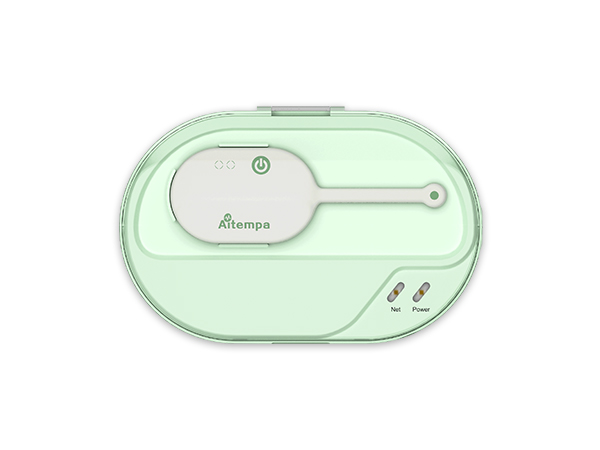
Wearable Home Wellness Tracker Monitors Nighttime Body Temperature to Prevent Wellness
Many people have experienced waking up in the middle of the night feeling too hot or too cold, even when the thermostat seems to be set just right. This situation is quite common and can affect sleep comfort and rest quality. While many assume the room temperature is the only factor, nighttime comfort is often influenced by both environmental conditions and individual temperature sensitivity. Because these changes are not always easy to notice, more people are beginning to pay attention to personal body signals and data. With the development of wearable technology, wearable home wellness trackers are increasingly used to monitor subtle changes and help people better understand how their bodies respond to different environments.
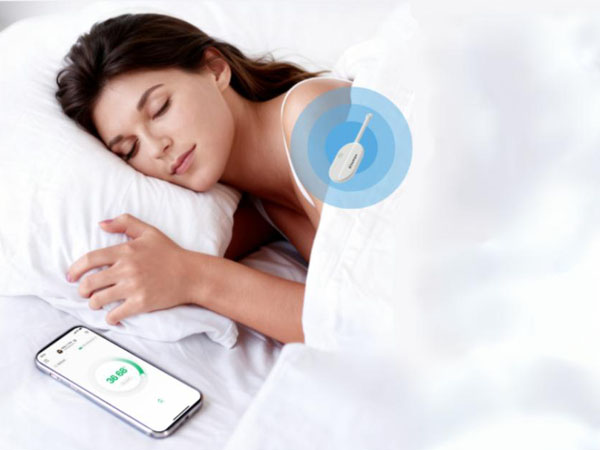
Several factors can influence how comfortable a person feels during sleep. Environmental conditions such as air-conditioning cycles, room ventilation, humidity, and bedding materials may cause small temperature fluctuations at night. At the same time, personal factors such as metabolism, body build, sleepwear, and fatigue levels can affect how the body perceives temperature. As a result, two people sleeping in the same room may experience the same environment very differently—one may feel comfortable while the other feels too cold or overheated.
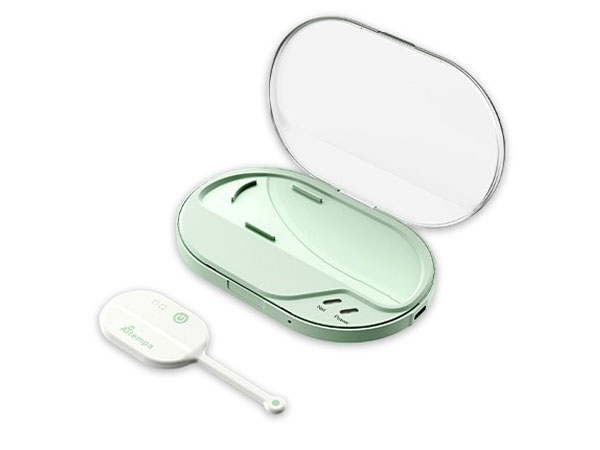
To better understand these changes, many users now turn to wearable tracking devices. Aitempa, a wearable home wellness tracker, records changes in body temperature during sleep and presents the data in a clear and easy-to-understand format. By observing temperature trends over time, users can gain a better understanding of how their body temperature changes during different periods of the night.
For example, the data may show that body temperature tends to drop during certain hours of sleep. With this information, users can make simple adjustments—such as changing bedding, adjusting room temperature, or selecting more suitable sleepwear—to improve nighttime comfort.